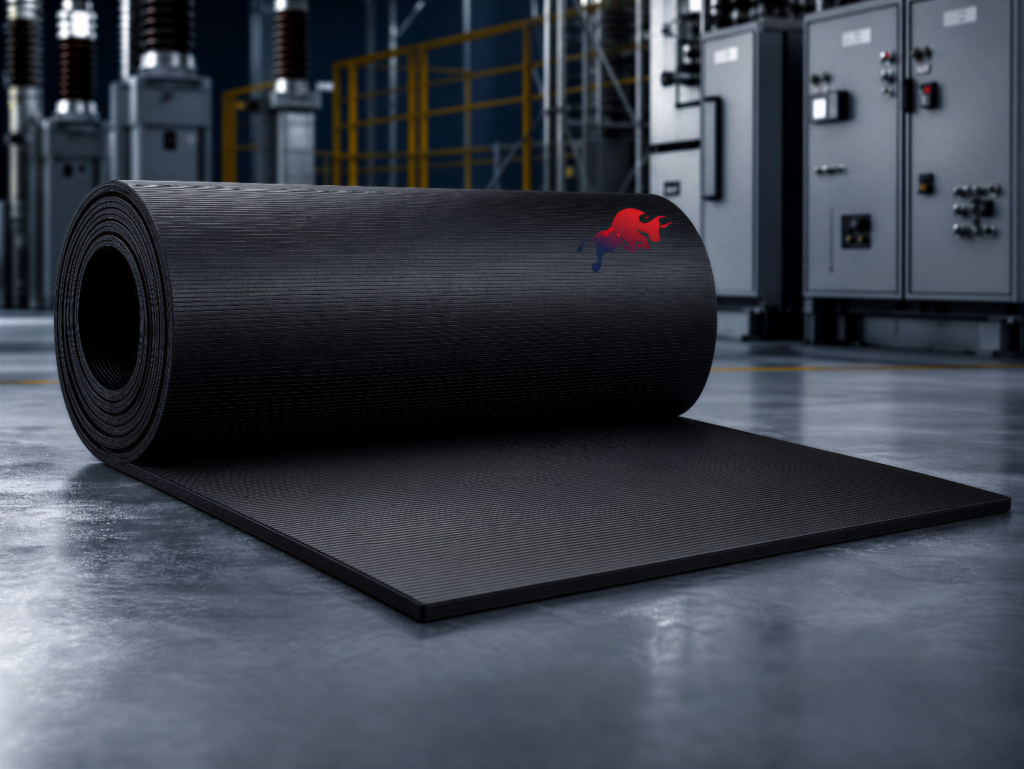
When operational environments demand high thermal stability, flame retardance, and chemical resilience, off-the-shelf rubber compounds fall short. At Berzelius Performance Materials, our high-spec Chloroprene (Neoprene) sheet rubber is engineered specifically to bridge the gap between mechanical flexibility and severe environmental endurance.
Modeled after global engineering benchmarks set by industry standard-bearers like McMaster-Carr, Berzelius delivers specialized vulcanized neoprene sheets tested to withstand extreme mechanical stress, hydrocarbon exposure, and hostile field conditions.
Key Technical Specifications & Engineering Standards
Our specialized Neoprene sheeting is available in both solid and high-density closed-cell foam structures, with fabric-reinforced options (nylon/polyester/fiberglass inserts) designed to handle sustained pressure without deformation.
Property | Standard / Commercial Grade | Berzelius Military & Offshore Grade | Test Standard |
Durometer (Hardness) | 50A – 60A | 30A to 80A Shore A (±5) | ASTM D2240 |
Tensile Strength | 500 – 800 PSI | 1,200 – 2,000+ PSI | ASTM D412 |
Elongation at Break | 200% – 250% | 300% – 500% | ASTM D412 |
Operating Temp Range | -20°F to 180°F | -40°F to +250°F (-40°C to +121°C) | ASTM D2000 |
Flame Retardance | Basic Self-Extinguishing | MIL-SPEC / FAR 25.856 / UL 94 V-0 Compliant | UL 94 / FAR |
Reinforcement Options | Unreinforced | 1-Ply to 4-Ply Fabric Inserted (Nylon/Cotton) | ASTM D1330 / MIL-S |
Critical Defense & Military Applications
Military logistics and combat equipment demand materials that comply strictly with MIL-SPEC and DFARS standards. Berzelius Neoprene provides:
Rugged Solutions for Oil & Gas Operations
Offshore platforms, refineries, and drilling rigs present combined threats: petroleum hydrocarbons, saltwater, ozone, and flame risks.
Why Engineers Partner with Berzelius Performance Materials
Frequently Asked Questions (FAQ)
Q1: How does Berzelius Neoprene perform compared to Nitrile (NBR) in oil and gas applications?
A: Nitrile offers superior resistance to pure petroleum fluids. However, Neoprene is the preferred choice when the application requires a balanced combination of moderate oil resistance along with exceptional weather, ozone, UV, and flame resistance—crucial for exposed offshore environments.
Q2: Are Berzelius neoprene sheets compliant with military specifications?
A: Yes. We manufacture neoprene sheets conforming to various military specifications, including MIL-R-6855, MIL-R-3065, and DFARS specialty requirements for defense manufacturing.
Q3: Why choose fabric-reinforced neoprene over standard solid neoprene?
A: Fabric-reinforced sheets incorporate duck, nylon, or fiberglass ply layers. This eliminates “gasket creep” or blowouts under high compression loads while maintaining optimal surface sealability.
Q4: What durometer options are available for shock absorption vs. fluid sealing?
A: We stock hardness levels from soft 30A-40A (ideal for door seals and low-pressure cushioning) up to 70A-80A (engineered for high-pressure industrial flange gaskets and mechanical pads).
WhatsApp us