What is Liquid Silicone Rubber (LSR)? Properties, Processes, and Applications
When traditional High-Consistency Rubber (HCR) cannot meet the demands for rapid, high-precision production, Liquid Silicone Rubber (LSR) provides the solution.The LSR Injection Molding ProcessMaterial Supply: The LSR is supplied as a two-component liquid system in separate drums (Part A with a platinum catalyst, Part B with a crosslinker).Precise Mixing: Components
Read moreThe Role of Silicone Setting Blocks and Gaskets in Modern Glass Facades
Modern structural glazed facades face extreme engineering challenges regarding wind load, thermal expansion, and seismic activity. The micro-environment securing these heavy glass panes relies entirely on high-quality setting blocks and gaskets.Core Functions of Setting BlocksCentering the heavy glass panel securely within the aluminum frame.Cushioning the glass against the rigid metal
Read moreFluorosilicone vs. Standard Silicone: A Material Selection Guide
Selecting the right elastomer for industrial gaskets and seals requires balancing temperature resistance with environmental exposure.FeatureStandard Silicone (VMQ)Fluorosilicone (FVMQ)Operating Temperature-50°C to +250°C (Up to 350°C in special mixes)-60°C to +200°CChemical ResistancePoor resistance to fuels and hydrocarbon solventsExcellent resistance to jet fuels, engine oils, and solventsEnvironmental ResistanceExceptional (Ozone, UV, Weathering)Exceptional (Ozone,
Read moreUnderstanding UL 555S: Why Your HVAC Damper Seals Need Certified Fire-Retardant Silicone
When designing commercial HVAC systems, safety cannot be compromised, especially regarding fire and smoke dampers which rely heavily on high-performance elastomer seals.What is the UL 555S Standard? Underwriters Laboratories (UL) 555S is a rigorous standard for smoke dampers used in HVAC systems. Dampers are tested for operational reliability under high-velocity
Read moreThe Engineer’s Guide to Bonding Neoprene Sheets
Neoprene (chloroprene) rubber provides exceptional balanced resistance to weathering, physical abrasion, and moderate chemical exposure. However, the success of a Neoprene gasket, lining, or vibration pad depends entirely on the integrity of its installation. Achieving a permanent, waterproof bond requires a strict combination of solvent-based contact cement and uniform clamping
Read moreEngineered for Extremes: High-Performance Neoprene Sheets for Defense, Military, and Oil & Gas Applications
When operational environments demand high thermal stability, flame retardance, and chemical resilience, off-the-shelf rubber compounds fall short. At Berzelius Performance Materials, our high-spec Chloroprene (Neoprene) sheet rubber is engineered specifically to bridge the gap between mechanical flexibility and severe environmental endurance.Modeled after global engineering benchmarks set by industry standard-bearers like
Read moreEngineered for Extremes: High-Performance Neoprene Sheets for Defense, Military, and Oil & Gas Applications
When operational environments demand high thermal stability, flame retardance, and chemical resilience, off-the-shelf rubber compounds fall short. At Berzelius Performance Materials, our high-spec Chloroprene (Neoprene) sheet rubber is engineered specifically to bridge the gap between mechanical flexibility and severe environmental endurance.Modeled after global engineering benchmarks set by industry standard-bearers like
Read moreHigh-Performance Gym Rubber Flooring & Tiles
Ultimate Guide to Choosing High-Performance Gym Rubber FlooringCreating a professional gym, sports facility, or play area requires flooring that handles extreme shock, protects subfloors, and lowers noise levels. BERZELIUS Rubber Flooring delivers eco-friendly, long-lasting performance across commercial and residential applications.Key Benefits of High-Density Rubber FlooringShock Absorption & Noise Reduction: Advanced
Read moreComplete Guide to Electrical Safety: Selecting IEC 61111 Insulating Mats
Ensuring worker safety in high-voltage environments requires reliable surface protection. Berzelius Performance Materials Inc. manufactures high-quality dielectric rubber insulation mats compliant with IEC 61111:2009 to protect personnel working near live switchboards, control panels, and substations.Key Voltage Classes & Technical Specifications Selecting the correct insulation mat depends on the maximum operating
Read more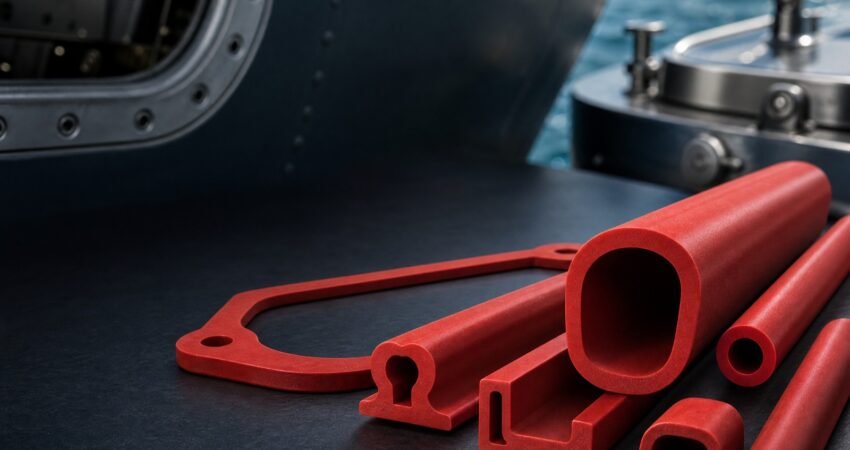
Silicone Gaskets for Aviation and Marine Service: A Material-Selection Framework
Silicone Gaskets for Aviation and Marine Service: A Material-Selection FrameworkIn aviation and marine work, a gasket is not selected because it looks right on a sample board. It is selected because its compound, geometry, compression behaviour and qualification pathway are appropriate for the real service environment. The consequences of overlooking
Read more